
In the silent hum of a modern factory, a revolution is unfolding, not with roaring machinery, but with data—streams of it, flowing from countless unseen sentinels. These are high-precision Industrial sensors, the unassuming yet pivotal components transforming raw production lines into intelligent, self-optimizing ecosystems. Far more than mere measuring devices, they are the foundational nervous system of Industry 4.0, enabling a leap from reactive maintenance to predictive operation and from consistent quality to unprecedented perfection.
The demand for such extreme accuracy stems from today’s manufacturing imperatives. Whether producing nanometer-scale semiconductor chips, life-saving pharmaceutical compounds, or the lightweight alloys for next-generation aerospace, the margin for error has evaporated. A micron’s deviation, a fractional degree of temperature shift, or a subtle vibration can mean the difference between a flawless product and a costly failure. High-precision sensors—capable of detecting changes at levels often imperceptible to humans—provide the critical feedback needed to control these micro-environments with absolute authority.
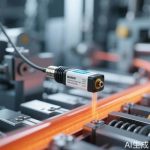
Consider the realm of optical and laser sensors. Deployed in automated quality inspection, they don’t just check if a part is present; they map its entire surface topography in 3D, identifying defects smaller than a human hair. In robotic assembly, laser trackers provide real-time, sub-millimeter positional feedback, allowing robotic arms to perform delicate tasks with the dexterity of a master craftsman. This precision eliminates costly rework and ensures that complex products, from electric vehicle battery packs to medical devices, are assembled perfectly every time.
Similarly, advancements in MEMS (Micro-Electro-Mechanical Systems) technology have miniaturized inertial sensors like accelerometers and gyroscopes without sacrificing accuracy. Embedded within industrial machinery, these sensors monitor tilt, vibration, and shock with extreme sensitivity. This allows for the early detection of bearing wear or motor misalignment long before a catastrophic breakdown occurs, shifting maintenance schedules from calendar-based guesses to data-driven certainty. The result is dramatically reduced downtime and extended asset life.
The true power of these sensors, however, is unlocked not in isolation, but in convergence. A modern CNC machine might be equipped with a symphony of sensors: strain gauges monitoring cutting force, thermistors tracking thermal expansion, and capacitive sensors ensuring tool positioning. This multisensory data is fused in real-time by edge computing systems, allowing the machine to compensate dynamically—adjusting feed rates or coolant flow to maintain tolerances under varying conditions. This creates a form of manufacturing autonomy, where machines are not just automated but cognitively adaptive.
Furthermore, the integration of high-precision sensing with the Industrial Internet of Things (IIoT) is creating fully transparent operations. Data from sensors monitoring pressure in hydraulic lines, gas composition in chemical reactors, or spectral purity in food and beverage production is aggregated on cloud platforms. Here, advanced analytics and AI algorithms discern patterns, predict outcomes, and optimize entire processes for peak efficiency, yield, and sustainability. Leaders gain a holistic, real-time view of their operational health, empowering strategic decision-making.
Ultimately, investing in high-precision sensing is an investment in resilience and competitive advantage. It is the key to achieving zero-defect manufacturing, minimizing waste, conserving energy, and ensuring absolute safety in hazardous environments. It enables the production of smarter, more complex, and more reliable products that define market leadership. As we stand on the brink of an era defined by smart factories and digital twins, these sensors provide the essential, high-fidelity data that makes the virtual model a mirror of the physical world.
The journey toward the factory of the future is paved with data, and high-precision Industrial sensors are the meticulous cartographers. They are moving us beyond simple observation into the realm of profound understanding and control. For any enterprise serious about innovation, quality, and efficiency, mastering this invisible world of precision is no longer an option—it is the imperative first step.

Leave a Message