
In the silent, pressurized world beneath the waves, where human presence is fleeting and fragile, a quiet revolution is underway. It is driven not by submarines or divers, but by unassuming, rugged devices known as submersible pressure sensors. These technological sentinels are the unsung heroes of modern exploration, industry, and environmental stewardship, translating the immense, silent language of water pressure into a stream of actionable, life-changing data.
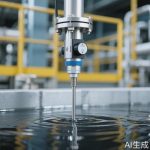
At its core, a submersible pressure sensor is a master of translation. It measures the force exerted by a column of liquid above it—a direct function of depth. But today’s sensors are far more than simple depth gauges. Encased in robust materials like titanium or stainless steel, with advanced sensing elements such as silicon piezoresistive or ceramic capacitive cells, they are engineered to withstand crushing pressures, corrosive saltwater, and biological fouling. Their mission: to deliver precise, reliable readings from environments where failure is not an option.
The applications are as vast as the oceans themselves. In offshore oil and gas, these sensors are critical for monitoring wellhead pressure, ensuring safe drilling operations thousands of meters below the seabed. In aquaculture, they enable precise control of feeding systems and environmental conditions within submerged cages, optimizing fish health and growth. For hydrologists and water utility managers, they are indispensable for monitoring reservoir levels, groundwater resources, and pipeline integrity, forming the backbone of smart water management networks that conserve our most precious resource.
Perhaps the most profound impact is felt in the realm of oceanography and climate science. Arrays of sensor-equipped buoys and autonomous underwater vehicles (AUVs), often carrying highly calibrated submersible sensors, are painting an unprecedented picture of our changing oceans. They track sea-level rise with millimeter accuracy, monitor deep-sea currents that regulate global climate, and measure parameters like temperature and salinity in concert with pressure to model complex oceanographic phenomena. This data is crucial for predicting weather patterns, understanding climate change impacts, and protecting vulnerable coastal ecosystems.
Beyond large-scale projects, the technology empowers innovation at every scale. Recreational divers rely on sensor-integrated computers for safety. Engineers use them to test underwater structures and vehicles. Even in controlled industrial settings, such as chemical processing tanks or deep mining sumps, submersible pressure sensors provide vital process control and leak detection. Their versatility stems from a relentless focus on key performance indicators: long-term stability, exceptional accuracy, low power consumption for remote deployments, and robust signal output that can travel vast distances through cables or be transmitted wirelessly.
Choosing the right sensor, however, is a science in itself. It requires a careful balance of specifications. The required pressure range and depth rating are paramount. The media compatibility—whether it’s pure water, seawater, or a harsh chemical—dictates the wetted materials. Output signals (4-20mA, 0-5V, digital protocols like SDI-12) must integrate seamlessly with existing data loggers or control systems. Furthermore, factors like thermal compensation for varying water temperatures and resistance to shock and vibration are critical for ensuring data integrity in dynamic underwater environments.
As we look to the future, the role of submersible pressure sensors will only expand. They are fundamental to the development of the ‘Internet of Underwater Things,’ a networked world of communicating sensors that will provide real-time, holistic monitoring of marine environments. They will guide the next generation of deep-sea mining robots, enable more sophisticated underwater energy harvesting, and continue to be the foundational tool for exploring the final frontiers on our own planet, from the Mariana Trench to subglacial lakes in Antarctica.
In essence, submersible pressure sensors are our permanent, precise eyes and ears in the deep. They transform the abstract concept of pressure into a critical data point that drives safety, efficiency, and discovery. By reliably measuring the weight of the water above, they help us carry the burden of managing and understanding our planet’s aquatic systems. For any enterprise or research initiative that operates at the interface of technology and water, investing in advanced submersible pressure sensing isn’t just an equipment choice—it’s a strategic dive into a future built on data-driven insight.

Leave a Message