
In the intricate dance of modern industrial automation, where precision dictates profitability and safety is paramount, one silent sentinel plays a more critical role than often credited: the temperature sensor. But we’ve moved far beyond simple thermometers. Today, the integration of advanced PLC Temperature Sensors with Programmable Logic Controllers forms the intelligent nervous system of factories, refineries, and production lines worldwide. This isn’t just about reading a number; it’s about harnessing real-time data to make autonomous decisions that optimize processes, prevent catastrophic failures, and unlock unprecedented levels of efficiency.
The evolution from standalone sensors to PLC-integrated systems marks a quantum leap. A traditional sensor might signal an alarm when a motor overheats, but a smart PLC temperature monitoring system can predict the overheat by analyzing rate-of-change trends, preemptively reduce the machine’s load, activate auxiliary cooling, and log the incident for maintenance—all within milliseconds and without human intervention. This proactive approach transforms temperature from a mere parameter to be observed into a dynamic variable to be managed, creating a self-regulating and resilient operational environment.
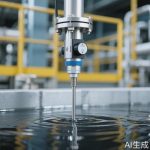
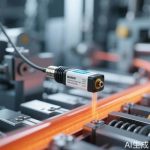
So, what makes a temperature sensor “PLC-ready”? The key lies in seamless communication. Modern sensors output standardized signals—4-20mA, 0-10V, or directly via digital protocols like Modbus RTU, Profibus, or EtherNet/IP. This allows the PLC, the brain of the operation, to continuously scan and process data from dozens or even hundreds of sensor points simultaneously. Whether it’s a rugged RTD (Resistance Temperature Detector) for extreme stability in furnace applications or a responsive thermocouple for rapid temperature shifts in plastic injection molding, the sensor’s sole purpose is to provide accurate, reliable data that the PLC’s logic can act upon.
The applications are as diverse as industry itself. In food and beverage production, PLC-connected sensors ensure precise thermal control during pasteurization and fermentation, critical for both safety and product consistency. In pharmaceutical manufacturing, they monitor and validate strict temperature ranges in clean rooms and storage facilities, ensuring compliance with rigorous FDA guidelines. In energy, they safeguard turbines and transformers, while in automotive assembly, they control paint booth temperatures and welding processes. In each scenario, the PLC doesn’t just collect data; it executes complex control algorithms—triggering heaters, chillers, valves, or alarms—to maintain the perfect thermal equilibrium.
The benefits cascade across the entire operation. First and foremost is enhanced predictive maintenance. By monitoring bearing temperatures on conveyors or winding temperatures in motors, PLCs can identify abnormal patterns long before a breakdown occurs, scheduling maintenance at convenient times and avoiding costly unplanned downtime. Secondly, energy efficiency sees dramatic improvement. Instead of running cooling systems constantly, a PLC can modulate their operation based on real-time thermal loads, slashing energy consumption. Finally, product quality soars as thermal processes are controlled with microscopic precision, batch after batch, reducing waste and rework.
Implementing an effective system requires careful consideration. Engineers must select sensors with the appropriate temperature range, accuracy, and environmental durability (ingress protection ratings). The placement of sensors is a science in itself, ensuring they measure the true process temperature. Within the PLC program, technicians create ladder logic or structured text that defines setpoints, hysteresis bands, and alarm hierarchies. The modern trend integrates these systems into broader IIoT (Industrial Internet of Things) platforms, where temperature data is visualized on dashboards, analyzed for long-term trends, and used to drive continuous improvement initiatives across the enterprise.
In conclusion, PLC Temperature Sensors represent the critical fusion of sensing and control. They are the indispensable link that closes the loop in automated systems, transforming raw thermal data into actionable intelligence. For any operation seeking to improve reliability, safety, and bottom-line results, investing in a robust, intelligent temperature monitoring and control architecture is no longer an optional upgrade—it’s a fundamental pillar of modern industrial competitiveness. The future is not just automated; it’s thermally intelligent, responding and adapting with a speed and accuracy that human operators alone could never achieve.

Leave a Message