
In the heart of a humming automotive assembly line or within the sterile confines of a semiconductor cleanroom, a silent revolution is underway. It’s not driven by robotic arms or flashy AI interfaces, but by a class of unassuming yet profoundly critical components: industrial displacement sensors. These devices, the unsung heroes of modern automation, are the definitive arbiters of precision, measuring minute positional changes—often down to the sub-micron level—that are invisible to the human eye. Their role transcends simple measurement; they are the foundational sensory layer enabling quality, safety, and efficiency in today’s most advanced industrial ecosystems.
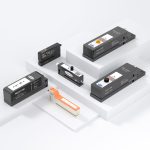
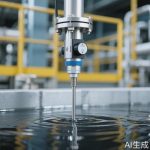
The core function of an industrial displacement sensor is deceptively simple: to accurately determine the distance between itself and a target object without physical contact. However, the technological sophistication behind this task is immense. From high-precision laser triangulation sensors that project a focused beam to analyze the reflected light’s angle, to rugged inductive sensors that detect the presence of conductive metals through electromagnetic fields, and capacitive variants sensitive to any material, the choice of technology is dictated by the application’s specific demands for range, resolution, environmental resistance, and target material.
Consider the transformative impact on quality control. In sectors like aerospace and medical device manufacturing, where tolerances are measured in micrometers, a deviation is not an error—it’s a potential catastrophe. Non-contact displacement sensors provide continuous, real-time feedback on component dimensions, surface flatness, and vibration. They can detect a warped turbine blade, ensure the perfect thickness of a drug-eluting stent, or verify the seamless gap between a smartphone screen and its bezel. This constant vigilance moves quality assurance from a sample-based, post-production checkpoint to an integrated, 100% inline inspection process, virtually eliminating batch failures and costly rework.
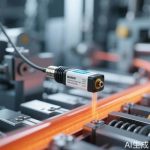
Beyond inspection, these sensors are pivotal in enabling adaptive and predictive manufacturing. In robotic welding cells, displacement sensors guide the torch along complex seams with unwavering consistency, compensating for part variances in real-time. On precision grinding and milling machines, they act as closed-loop feedback systems, allowing the machine to adjust tool paths automatically as tools wear down, ensuring the final part matches the digital blueprint perfectly. This capability is the cornerstone of Industry 4.0, where machines are not just automated but intelligently self-correcting.
The operational benefits extend directly to the bottom line through enhanced predictive maintenance. By continuously monitoring the runout of a motor shaft, the vibration of a high-speed spindle, or the positional drift of a linear actuator, displacement sensors can identify anomalies long before a catastrophic failure occurs. This shift from reactive or scheduled maintenance to a condition-based approach minimizes unplanned downtime, extends machinery lifespan, and optimizes maintenance resource allocation, delivering significant return on investment.
Selecting the right displacement sensor is a critical engineering decision. Key considerations include measuring range and resolution, the required speed of measurement, environmental factors like temperature extremes, dust, oil, or electromagnetic interference, and the nature of the target surface. Modern sensors are increasingly intelligent, featuring integrated processors for onboard data analysis, digital interfaces like IO-Link for seamless integration into industrial networks, and robust designs that withstand the harshest plant-floor conditions.
As we look to the future, the evolution of industrial displacement sensors is intertwined with broader trends in digitalization. The next generation of sensors will not only capture data but will also possess enhanced edge-computing capabilities to pre-process information, feeding higher-value insights directly into Manufacturing Execution Systems (MES) and digital twins. This creates a living, breathing digital replica of the physical process, enabling unprecedented optimization and simulation.
In essence, industrial displacement sensors are far more than mere measuring tools. They are the fundamental enablers of precision, the guardians of quality, and the silent partners in innovation. By transforming imperceptible physical changes into actionable, reliable data, they empower manufacturers to build smarter, safer, and more efficient operations. In the relentless pursuit of perfection that defines modern industry, these sensors provide the vision necessary to see—and control—what truly matters.
Leave a Message