
For decades, the industrial valve was a mechanical sentinel—a robust, often manually operated device tasked with the critical job of controlling the flow of liquids, gases, and slurries. Its performance was judged by its ability to open, close, and hold. Yet, in an era of Industry 4.0 and smart manufacturing, simply holding position is no longer enough. The true intelligence of a modern fluid control system doesn’t reside solely in the valve itself, but in the silent, precise sentinel mounted upon it: the industrial valve pressure sensor. This unassuming component is transforming valves from passive blockers into dynamic, data-rich nodes in the industrial network.
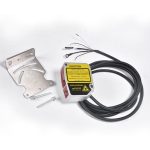
At its core, an industrial valve pressure sensor is a transducer that converts the physical force exerted by a process fluid into a reliable, standardized electrical signal. When integrated directly onto or near a valve—be it a ball, gate, globe, or butterfly valve—it provides real-time, localized pressure data at the very point of control. This is a paradigm shift from traditional methods where pressure might be measured at distant points in a pipeline, offering only a generalized view of system health. The sensor on the valve delivers the ground truth.
The applications and benefits of this precise monitoring are profound. First and foremost is predictive maintenance. A pressure sensor can detect subtle anomalies like pressure spikes, gradual drops, or irregular fluctuations that precede valve failure, seal degradation, or pipeline blockage. Instead of reactive, costly shutdowns for emergency repairs, maintenance can be scheduled proactively, minimizing downtime and preventing catastrophic leaks or process interruptions. Furthermore, these sensors are vital for ensuring precise process control. In critical operations like chemical dosing, fuel injection, or food and beverage processing, maintaining exact pressure is synonymous with maintaining product quality, safety, and recipe consistency.
Modern valve pressure sensors are feats of engineering, designed to withstand the harshest environments. They are built with robust materials like stainless steel or Hastelloy, featuring diaphragms that can handle aggressive media, extreme temperatures, and high vibration. More importantly, they are becoming increasingly intelligent. The latest generation goes beyond simple 4-20mA analog outputs to feature digital communication protocols like HART, Profibus PA, or IO-Link. This digital layer allows for two-way communication, enabling remote configuration, advanced diagnostics, and the transmission of detailed status information alongside the primary pressure value.
The integration of these smart sensors creates a powerful feedback loop. Data from the valve is fed into a PLC, DCS, or cloud-based IoT platform. Here, it can be analyzed alongside data from flow meters, temperature sensors, and actuator positioners. This holistic view allows for sophisticated control strategies, such as cascade control loops where valve position is automatically adjusted based on live pressure readings to maintain a setpoint with unparalleled accuracy. It also enables the creation of a digital twin of the fluid system, where performance can be simulated and optimized virtually.
Choosing the right pressure sensor for a valve application requires careful consideration. Key factors include the pressure range, the chemical compatibility of the wetted materials with the process fluid, the required accuracy and long-term stability, the environmental conditions (temperature, humidity, potential for washdowns), and the necessary electrical output and connectivity. Collaboration with experienced sensor and valve specialists is crucial to ensure a seamless and reliable integration.
In conclusion, the marriage of the industrial valve with advanced pressure sensing technology marks a leap from brute-force control to informed, automated management. These sensors provide the essential nervous system for industrial processes, turning pressure from a mere reading into a strategic asset. They empower engineers to achieve new levels of efficiency, safety, and reliability. In the quest for operational excellence, the question is no longer whether to monitor pressure, but how intelligently you can do it. The smart valve, equipped with its vigilant pressure sensor, is ready to provide the answer.


Leave a Message