
Invisible yet indispensable, air pressure is a fundamental force shaping our environment, our technology, and even our health. For centuries, we measured it with simple mechanical gauges and barometers. Today, the story is different. The humble air pressure sensor, a marvel of micro-electromechanical systems (MEMS), has evolved from a basic measuring tool into a silent, intelligent orchestrator embedded in countless devices. This isn’t just about checking your tire pressure; it’s about a sensory revolution that is making our world smarter, safer, and more responsive.
At its core, a modern air pressure sensor is a microscopic masterpiece. Often no larger than a grain of sand, these sensors detect the force exerted by the weight of air molecules. The most common type, the piezoresistive MEMS sensor, uses a tiny, flexible diaphragm. As pressure changes, the diaphragm bends minutely, altering the electrical resistance of embedded materials. This change is converted into a precise digital signal, a language understood by processors everywhere. This miniaturization and digital precision are what unlock a universe of applications far beyond traditional uses.
Consider your smartphone. That weather app providing localized altitude and pressure readings? Thank the built-in barometric sensor. It enables more accurate GPS locking, aids in indoor navigation by detecting floor-level changes, and even contributes to health tracking by estimating calories burned during a climb. In wearable tech, these sensors are pivotal for advanced fitness monitoring, calculating elevation gain during a hike with stunning accuracy, a feature once reserved for specialized mountaineering equipment.
The automotive industry is a powerhouse of innovation for air pressure sensors. The mandatory Tire Pressure Monitoring System (TPMS) is the most visible example, enhancing safety, fuel efficiency, and tire longevity. But look deeper. Engine control units rely on manifold absolute pressure (MAP) sensors to optimize the air-fuel mixture for performance and emissions. Advanced driver-assistance systems (ADAS) use barometric sensors to compensate for weather-related pressure changes, ensuring the accuracy of features like adaptive cruise control. In autonomous vehicles, precise ambient pressure data is crucial for environmental modeling and system validation.
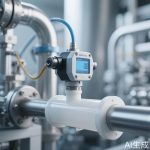
Perhaps the most transformative impact is in the realm of the Internet of Things (IoT) and smart infrastructure. Networks of wireless pressure sensors monitor pipelines for leaks in real-time, preventing waste and environmental disasters. In agriculture, they are deployed in the soil and across fields to monitor microclimates, informing precise irrigation systems that conserve water. Smart buildings use them for HVAC optimization, adjusting airflow based on occupancy and external conditions to slash energy costs. These sensors are the unsung heroes creating a data-rich, efficient, and sustainable physical world.
Looking ahead, the future of air pressure sensing is one of even greater integration and intelligence. The convergence with other sensors—temperature, humidity, gas composition—is creating sophisticated environmental sensing hubs. Developments in ultra-low-power designs and energy harvesting will allow sensors to operate for years without battery changes, enabling permanent installations in remote locations. Furthermore, the rise of AI and edge computing means these sensors won’t just collect data; they will interpret it locally, triggering immediate actions—from adjusting a smart ventilator in a hospital to alerting a maintenance drone about a potential structural fault in a bridge.
From the palm of your hand to the depths of industrial systems, air pressure sensors have transcended their original purpose. They are no longer mere instruments but critical enablers of connectivity, automation, and insight. They work silently in the background, translating the subtle whispers of the atmosphere into actionable intelligence. As we build towards a more automated and responsive world, these tiny sentinels of pressure will undoubtedly remain at the forefront, proving that sometimes, the most powerful innovations are those you can barely see, yet cannot afford to live without.

Leave a Message