
In an era defined by microscopic tolerances and relentless pursuit of perfection, the ability to measure with unerring accuracy is not just an advantage—it’s a necessity. At the heart of this silent revolution lies a technology so elegant and powerful that it operates unseen in countless applications: the photoelectric displacement sensor. Far from being a mere component, these sensors are the unsung heroes enabling the precision that drives innovation in manufacturing, robotics, aerospace, and beyond. They are the definitive answer to the question: how do we quantify movement and position at speeds and scales beyond human perception?
Photoelectric displacement sensors function on a beautifully simple principle: they emit a beam of light—often a laser or LED—towards a target object. The reflected light is then captured by a receiver within the sensor. By analyzing the properties of this returning light, such as the angle of incidence, the phase shift, or the position of the beam spot on a photodetector, the sensor can calculate the exact distance to the target with astonishing resolution, often down to the sub-micron level. This non-contact method is its superpower; it allows for measurement without physical interaction, eliminating wear, distortion, and contamination, and enabling measurements on delicate, hot, or fast-moving objects that would be impossible to touch.
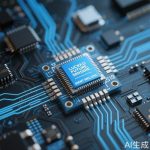
The transformative impact of this technology is most palpable on the factory floor. In automated production lines, photoelectric displacement sensors are the vigilant guardians of quality. They perform real-time, in-line inspections of component dimensions, verify the precise placement of microchips on circuit boards, and monitor the thickness of coatings and films with relentless consistency. This continuous stream of high-fidelity data is fed directly into control systems, allowing for instantaneous adjustments and creating a closed-loop of perfection that minimizes waste and maximizes yield. In precision machining, from engine blocks to medical implants, these sensors ensure every cut and every contour adheres to the digital blueprint without deviation.
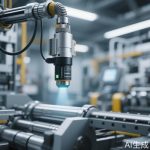
Beyond static measurement, the true prowess of these sensors is revealed in dynamic environments. In the world of robotics and automation, they provide the critical feedback for precise positioning and trajectory control. A robotic arm assembling a smartphone or handling a solar wafer relies on photoelectric sensors to “see” its position in space with micro-level accuracy, enabling smooth, coordinated, and error-free movement. This capability is fundamental to the development of collaborative robots (cobots) that work safely alongside humans, as their sensors can detect the subtlest changes in proximity and position.
The applications soar to new heights—literally—in aerospace and advanced research. Here, photoelectric displacement sensors are tasked with measuring vibrational frequencies in turbine blades, aligning sensitive optical systems in satellites, and monitoring structural deformations in airframes under stress. Their non-contact nature and immunity to electromagnetic interference make them ideal for these critical, high-stakes environments. In scientific laboratories, they are indispensable in scanning probe microscopy and experimental setups where nanometer-scale displacements must be tracked to unlock new discoveries in materials science and physics.
Choosing the right photoelectric displacement sensor hinges on understanding key parameters: measuring range, resolution, spot size, response speed, and environmental robustness. A confocal chromatic sensor, for example, excels at measuring mirrored or transparent surfaces, while a laser triangulation sensor might be ideal for longer ranges on diffuse surfaces. The latest advancements integrate smart features like embedded processors, IO-Link communication for seamless Industry 4.0 integration, and enhanced algorithms that compensate for surface color or texture variations, making them more versatile and easier to deploy than ever before.
As we stand on the brink of wider adoption of the Internet of Things (IoT) and smart manufacturing, the role of photoelectric displacement sensors is set to expand exponentially. They are evolving from discrete measurement tools into intelligent network nodes, providing not just data, but actionable insights. They enable predictive maintenance by detecting early signs of equipment wear and facilitate the creation of digital twins—virtual replicas of physical systems that are updated in real-time by sensor data. This convergence of precision measurement with connectivity and intelligence is building a world where machines are not just automated, but perceptive and adaptive.
In conclusion, photoelectric displacement sensors are far more than technical instruments; they are fundamental enablers of modern precision. By translating the physical phenomenon of displacement into a stream of flawless digital data, they bridge the gap between the tangible world and the digital realm of control. They operate in the background, a testament to the power of light and ingenuity, ensuring that the products we rely on, the vehicles we travel in, and the technologies that shape our future are built not just well, but perfectly. In the quest for excellence, they are the unwavering, invisible hand guiding progress.

Leave a Message