
In the intricate symphony of modern industry, where efficiency, safety, and quality are the non-negotiable pillars of success, there exists a silent conductor ensuring every note is perfect: pressure. Not just any pressure measurement, but the kind delivered by High-Precision Pressure Transmitters. These are not your grandfather’s analog gauges; they are the sophisticated, digital sentinels transforming raw physical force into a stream of actionable intelligence, driving the next wave of operational excellence.
Imagine a pharmaceutical bioreactor where a minuscule pressure fluctuation could compromise a billion-dollar batch, or a deep-sea oil rig where integrity depends on monitoring casing pressure with unwavering accuracy. In semiconductor fabrication cleanrooms, the deposition of atomic layers is governed by vacuum pressure control finer than a whisper. This is the domain of high-precision transmitters. They go beyond simple monitoring to provide stability, repeatability, and reliability where ‘close enough’ is a recipe for catastrophic failure or monumental waste.
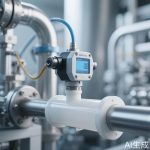
So, what sets a High-Precision Pressure Transmitter apart? The magic lies in a combination of advanced sensor technology, sophisticated signal conditioning, and robust construction. At their heart are sensors—often based on silicon piezoresistive or resonant wire technology—capable of detecting changes as small as 0.05% of the full-scale range. This raw signal is then purified and amplified by onboard microprocessors that compensate for temperature effects, linearity errors, and static pressure shifts. The result? A digital output of stunning accuracy and long-term stability, often with total error bands (TEB) within ±0.1% or better, that remains trustworthy for years, not just months.
The applications are as diverse as they are critical. In the energy sector, they enable smart grid management and precise custody transfer of natural gas, where a 0.1% error translates to massive financial loss. Automotive engineers rely on them for engine test stands and brake system validation, pushing the boundaries of performance and safety. In food and beverage production, they ensure consistent carbonation and perfect pasteurization, safeguarding both taste and public health. Even the burgeoning field of hydrogen economy leans on these devices for safe compression, storage, and dispensing of this promising yet challenging fuel.
However, the true power of modern High-Precision Transmitters is unlocked through connectivity. Integrated with Industrial Internet of Things (IIoT) platforms, these devices become nodes in a vast network of intelligence. They don’t just report a number; they communicate diagnostic data, predict maintenance needs, and feed real-time information into control algorithms and digital twins. This shift from measurement to insight allows for predictive maintenance, dynamic process optimization, and unprecedented levels of asset management, turning capital equipment from a cost center into a data-generating asset.
Selecting the right transmitter is a strategic decision. Key considerations extend beyond the stated accuracy on a datasheet. Process compatibility (wetted materials), long-term drift specifications, the required output protocol (4-20mA HART, Foundation Fieldbus, PROFIBUS, or wireless), and the instrument’s resilience to environmental stressors like vibration or humidity are all paramount. Partnering with a supplier that offers deep application engineering support is often the difference between a device that merely functions and one that delivers transformative value.
In conclusion, High-Precision Pressure Transmitters represent a fundamental leap from simple instrumentation to foundational elements of industrial intelligence. They are the critical link that ensures processes are not just controlled, but optimized; not just safe, but predictively secure; not just efficient, but sustainably profitable. In an era defined by data, they provide the first and most crucial data point of all. Investing in this level of precision is no longer a luxury for niche applications—it is a strategic imperative for any operation aiming to lead in quality, innovation, and operational resilience in the 21st century.
Leave a Message