
In the intricate symphony of modern industrial automation, where every movement must be precise and every limit respected, there exists a class of components that work tirelessly in the background. Displacement switch sensors, often overlooked, are the critical sentinels ensuring that machines operate within their safe mechanical boundaries, preventing catastrophic failures and enabling unparalleled accuracy. These devices are not merely switches; they are the definitive guardians of position, the silent arbiters of “enough.”
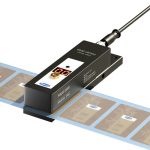
At their core, displacement switch sensors are electromechanical or electronic devices designed to detect the presence, absence, or position of an object by physical contact or proximity. When a target reaches a pre-set point in its linear or angular travel, the sensor actuates, sending a clear, unambiguous signal to the control system. This simple action—triggering at a specific displacement—is the foundation for complex sequences, safety interlocks, and quality control checks across countless industries.
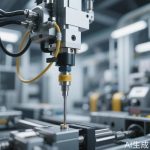
Why does this matter? Consider the high-stakes environment of a robotic welding cell in an automotive plant. A robotic arm must repeatedly move to an exact position to apply a perfect weld. A contact-type linear displacement switch acts as a hard-stop verification. If the arm’s servo system drifts or fails, the switch provides a failsafe signal to halt operations immediately, preventing a collision that could cost thousands in damaged equipment and production downtime. This is reliability you can literally touch.
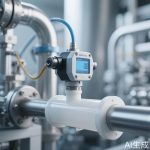
The applications are as diverse as industry itself. In hydraulic and pneumatic systems, these sensors monitor cylinder rod positions, ensuring presses stamp at the correct depth or clamps release only when fully open. In material handling, they confirm that a conveyor lift has reached its top or bottom limit before the next cycle begins. On wind turbines, they monitor blade pitch angles. In elevators, they verify that doors are fully closed before movement. Each scenario relies on the displacement switch’s unwavering commitment to a single, precise point in space.
Modern advancements have dramatically expanded their capabilities. While rugged mechanical limit switches with lever arms remain workhorses for harsh environments, non-contact technologies have emerged for applications demanding ultra-high precision or where physical contact is undesirable. Inductive sensors detect metallic targets, capacitive sensors sense a wider range of materials, and even miniature LVDT (Linear Variable Differential Transformer)-based systems provide analog feedback for the most demanding measurement tasks, with integrated switch outputs. This evolution means there is now a displacement sensing solution for virtually every challenge, from a gritty mining operation to a cleanroom semiconductor fab.
The true value proposition of integrating displacement switch sensors lies in a powerful trifecta: safety, precision, and cost-effectiveness. By preventing over-travel, they protect expensive machinery and tooling. By providing definitive positional feedback, they eliminate guesswork and reduce scrap rates. And by offering a simple, robust, and often more economical solution compared to complex continuous-position feedback systems, they keep automation projects both reliable and affordable. They are the epitome of elegant engineering—solving a critical problem with straightforward, dependable technology.
As Industry 4.0 drives connectivity and data analytics to the forefront, these sensors are also getting smarter. Units with IO-Link capability can communicate not just a simple on/off state but also diagnostic data like operating cycle counts or internal temperature, enabling predictive maintenance. This transforms them from simple switches into intelligent nodes in a networked system, contributing to overall equipment effectiveness (OEE).
In conclusion, displacement switch sensors are far from obsolete relics in an age of smart sensors. They are fundamental, evolving components that provide irreplaceable certainty. They answer the most critical question in motion control: “Has it reached its point?” In doing so, they build a bedrock of safety and repeatability upon which efficient, automated processes depend. For any engineer designing a system where position is paramount, specifying the right displacement switch isn’t just a technical detail—it’s a strategic decision for resilience and precision.
Leave a Message