
In the intricate symphony of modern industry, pressure is more than a physical force; it is a critical data point, a guardian of safety, and a silent arbiter of efficiency. For decades, the simple pressure gauge was the industry standard. Yet, in an era defined by connectivity, data, and relentless optimization, the paradigm of Industrial Pressure Monitoring & Control has undergone a radical transformation. It is no longer about merely observing a needle on a dial but about harnessing intelligent, integrated systems that predict, protect, and propel operations forward.
The stakes have never been higher. A minor pressure anomaly in a chemical reactor, a pipeline, or a hydraulic system can cascade into catastrophic failure, unplanned downtime, environmental incidents, or severe safety hazards. Traditional reactive approaches—waiting for a gauge to hit a red line—are economically and operationally untenable. Today’s leaders are shifting to a proactive, predictive model powered by smart sensors, IoT connectivity, and advanced analytics. This evolution is turning pressure from a potential liability into a strategic asset.
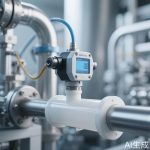
At the heart of this revolution are intelligent pressure transmitters and sensors. These are not your grandfather’s instruments. Modern devices offer unparalleled accuracy, digital communication capabilities (like HART, Profibus, or WirelessHART), and embedded diagnostics. They continuously stream real-time data to centralized control systems or the cloud, providing a live, holistic view of process health. This granular visibility allows engineers to detect subtle trends—a gradual drift, a tiny spike—that forewarn of issues like pump cavitation, filter clogging, or seal wear long before they cause a shutdown.
This data is the lifeblood of advanced control strategies. Integrated Pressure Monitoring & Control systems do not just report; they act. By feeding precise pressure data into Programmable Logic Controllers (PLCs) or Distributed Control Systems (DCS), they enable sophisticated closed-loop control. Systems can automatically adjust pump speeds, modulate control valves, or initiate safety sequences with millisecond precision. This ensures processes operate consistently at their sweet spot—maximizing yield, minimizing energy consumption, and ensuring product quality batch after batch.
The benefits extend powerfully into predictive maintenance. By analyzing pressure waveforms and historical data, AI-driven analytics can forecast equipment degradation. The system might alert that a compressor’s discharge pressure signature is deviating, indicating impending bearing failure. Maintenance can then be scheduled during a planned outage, avoiding the exorbitant costs and chaos of emergency repairs. This shift from run-to-failure to condition-based maintenance slashes downtime and extends asset life, delivering a direct and substantial return on investment.
Furthermore, robust pressure control is a cornerstone of operational safety and regulatory compliance. In industries from oil and gas to pharmaceuticals, stringent regulations govern pressure integrity. Modern systems provide tamper-proof audit trails, automated alarm management, and seamless integration with Safety Instrumented Systems (SIS). In the event of a dangerous overpressure or underpressure scenario, these systems can execute independent, failsafe shutdowns, protecting personnel, infrastructure, and the environment. This demonstrable safety commitment also simplifies compliance reporting, turning a regulatory necessity into a competitive advantage.
The future of Industrial Pressure Monitoring & Control is converging with the Industrial Internet of Things (IIoT) and digital twin technology. Imagine a virtual replica of your plant’s pressure network, fed by thousands of sensors, that can simulate scenarios, optimize setpoints, and train operators. Cloud platforms aggregate data across multiple sites, enabling benchmarking and best-practice sharing. The goal is a self-optimizing plant where pressure control systems autonomously adapt to changing conditions, raw materials, and production demands.
In conclusion, the journey from analog gauges to intelligent, networked systems represents a fundamental leap in industrial capability. Modern Pressure Monitoring & Control is no longer a supporting act but a central nervous system for smart manufacturing. It delivers an undeniable trifecta: enhanced safety through proactive protection, boosted efficiency through precise control, and increased profitability through predictive insights. For any industrial operation aiming to thrive in a competitive and demanding landscape, investing in these advanced systems is not merely an upgrade—it is an essential strategic imperative. The pressure to perform is on, and the right control system ensures you can handle it with confidence.
Leave a Message