
In an era defined by data, the humble measurement of temperature has undergone a quiet revolution. Gone are the days when a simple mercury column or basic thermocouple sufficed for critical applications. Today, the demand for accuracy, stability, and intelligence has given rise to a new class of components: Precision Temperature Sensors. These are not just components; they are the silent, vigilant guardians of quality, safety, and efficiency across industries, from the micro-environments of semiconductor fabs to the vast networks of smart cities.
What exactly sets a precision sensor apart? It is the uncompromising focus on metrics like absolute accuracy, long-term stability, low drift, and minimal self-heating. While a standard sensor might offer ±1°C accuracy, a precision variant can achieve ±0.1°C or better over its entire operating range. This granularity is paramount. In pharmaceutical storage, a fraction of a degree can determine drug efficacy. In precision agriculture, it can optimize growth conditions down to a single plant. In electric vehicle battery management systems, it is the difference between safe operation and thermal runaway. This level of fidelity transforms temperature from a simple reading into a high-resolution data point for advanced analytics and control.
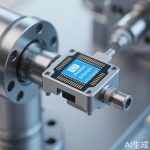
The technological heart of these sensors often lies in advanced semiconductor techniques. Platinum Resistance Temperature Detectors (RTDs) and ultra-stable thermistor networks provide exceptional linearity and repeatability. Meanwhile, integrated digital sensors harness CMOS processes to combine sensing elements, analog-to-digital converters, and communication interfaces like I2C or SPI onto a single chip. This integration reduces noise, simplifies design, and allows for direct digital output that microprocessors can readily consume, enabling smarter local decision-making without host intervention.
The true power of precision temperature sensing is unlocked within the Internet of Things (IoT). Each sensor becomes a node in a vast, intelligent network. In a smart factory, arrays of these sensors monitor machinery health, predicting failures before they occur by detecting anomalous heat patterns—a cornerstone of predictive maintenance. In data centers, they enable dynamic cooling, directing airflow precisely where needed, slashing enormous energy costs. For logistics and cold chain management, they provide an immutable, digital record of a product’s journey, ensuring vaccines and perishables remain within strict thermal boundaries, building trust and reducing waste.
For engineers and product developers, integrating these sensors is a strategic decision that elevates product value. It moves a design from “functional” to “high-performance” and “reliable.” Whether it’s a consumer wearable providing accurate core body temperature, an industrial PLC maintaining a delicate chemical process, or a weather station contributing to climate models, precision is the differentiator. The initial investment in a superior sensor is quickly offset by reduced calibration cycles, lower field failure rates, and the ability to command a premium in the market for proven quality and data integrity.
As we look to the future, driven by artificial intelligence and machine learning, the role of precision temperature data will only expand. AI algorithms thrive on high-quality, low-noise data to build accurate predictive models. The consistent, reliable stream from advanced sensors will fuel smarter autonomous systems, more efficient energy grids, and personalized healthcare devices. The sensor is no longer just a measuring device; it is the foundational sense of touch for the digital nervous system of our world.
In conclusion, precision temperature sensors represent a critical inflection point in measurement technology. They are the unsung heroes enabling the next wave of innovation, where control is not just about reacting to change, but anticipating and orchestrating it with exacting detail. For any enterprise serious about quality, efficiency, and intelligence, mastering this element of sensing is not an option—it is an imperative. The question is no longer if you need to measure temperature, but how precisely you need to know.


Leave a Message