
In the world of precision measurement, where microns matter and nanometers make the difference, capacitive displacement sensors stand as silent guardians of accuracy. These remarkable devices, operating on fundamental electrical principles, have become indispensable across industries ranging from aerospace to medical technology. Unlike their mechanical counterparts, capacitive sensors offer non-contact measurement capabilities that eliminate wear and tear while providing unprecedented resolution and stability.
The operating principle of capacitive displacement sensors is elegantly simple yet profoundly effective. They function by measuring changes in capacitance between the sensor and the target object. When an AC current is applied to the sensor, it creates an electrical field. Any variation in the distance between the sensor and target object alters this electrical field, resulting in measurable changes in capacitance. This fundamental relationship allows for incredibly precise distance measurements, often with sub-nanometer resolution.
What makes capacitive displacement sensors truly remarkable is their exceptional performance characteristics. They typically offer resolution down to 0.01 nanometers, bandwidth capabilities exceeding 10 kHz, and linearity errors of less than 0.1%. These specifications make them ideal for applications where extreme precision is non-negotiable. The non-contact nature of these sensors means they can measure delicate or sensitive materials without causing any damage or distortion, a crucial advantage in semiconductor manufacturing and biomedical applications.
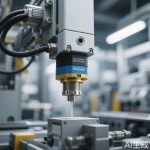
The industrial applications of capacitive displacement sensors are both diverse and impressive. In the semiconductor industry, they ensure precise positioning of wafers during lithography processes. Automotive manufacturers rely on them for quality control in engine component production. Aerospace engineers use them to measure turbine blade vibrations and ensure proper clearances in critical assemblies. The medical field employs these sensors in advanced imaging equipment and surgical robots, where millimeter precision can mean the difference between success and failure.
Modern capacitive sensors have evolved to overcome traditional limitations. Advanced designs now feature robust environmental compensation mechanisms that account for temperature fluctuations, humidity changes, and external electrical interference. Multi-channel systems allow for simultaneous measurement at multiple points, while integrated digital signal processing enables real-time data analysis and feedback. These innovations have expanded their usability into increasingly challenging environments, from high-temperature manufacturing processes to clean room applications.
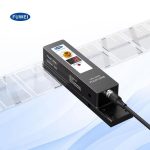
The selection and implementation of capacitive displacement sensors require careful consideration of several factors. Target material properties, measurement range, environmental conditions, and required resolution all play crucial roles in determining the optimal sensor configuration. Modern sensors come in various form factors, from miniature probes for tight spaces to large-area sensors for surface profiling. Understanding the specific application requirements is essential for maximizing the benefits of this sophisticated technology.
Looking toward the future, capacitive displacement sensors continue to evolve with emerging technologies. Integration with IoT systems enables remote monitoring and predictive maintenance capabilities. Advances in materials science are leading to sensors capable of operating in more extreme conditions. Machine learning algorithms are being developed to enhance signal processing and error compensation, pushing the boundaries of what’s possible in precision measurement.
The economic impact of capacitive displacement sensor technology cannot be overstated. By enabling higher precision in manufacturing processes, they contribute to reduced waste, improved product quality, and enhanced production efficiency. The initial investment in high-quality capacitive sensing systems often pays for itself through improved yield rates and reduced downtime. As industries continue to demand higher levels of precision and reliability, the importance of these sensors will only continue to grow.
In conclusion, capacitive displacement sensors represent a perfect marriage of fundamental physics and cutting-edge engineering. Their ability to provide non-contact, high-precision measurements has made them invaluable across numerous industries. As technology advances and the demand for precision increases, these sensors will undoubtedly play an even more crucial role in shaping the future of manufacturing, research, and technological innovation. The unseen precision they provide continues to drive progress in ways most people never see, but everyone benefits from.

Leave a Message