
In today’s rapidly evolving industrial landscape, precision measurement has become the cornerstone of quality control and process optimization. Among the myriad of measurement technologies available, laser displacement sensors stand out as remarkably versatile tools that have revolutionized how industries measure distance, thickness, and position with unprecedented accuracy. These sophisticated devices harness the power of laser triangulation to deliver non-contact measurements that were once unimaginable, making them indispensable across manufacturing, automotive, aerospace, and electronics sectors.
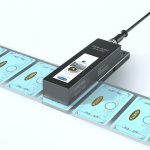
The fundamental principle behind laser displacement sensors is both elegant and powerful. By emitting a focused laser beam onto a target surface and precisely measuring the position of the reflected light using a receiving element, these sensors can calculate distance with micron-level accuracy. This non-contact methodology eliminates the risk of surface damage or measurement distortion that can occur with physical probes, while simultaneously enabling measurements on moving, fragile, or high-temperature surfaces that would be impossible to measure using conventional methods.
Modern laser displacement sensors offer an impressive array of capabilities that extend far beyond simple distance measurement. Advanced models can perform complex profile measurements, detect minute surface defects, monitor vibration patterns, and even measure multiple points simultaneously. With measurement speeds reaching up to 392,000 samples per second and resolutions down to 0.1 micrometers, these sensors provide real-time data that enables manufacturers to maintain tight tolerances and ensure product consistency throughout the production process.
The applications of laser displacement sensors span virtually every manufacturing sector. In automotive manufacturing, they ensure precise component alignment and verify critical dimensions on engine parts. In electronics production, they measure solder paste thickness and component placement accuracy. The food and packaging industries rely on them to monitor fill levels and container integrity, while the metal processing industry uses them to measure sheet flatness and thickness with exceptional precision. This versatility makes laser displacement sensors one of the most adaptable measurement solutions available today.
One of the most significant advantages of laser displacement sensors lies in their ability to operate in challenging environments where other measurement technologies would fail. Modern sensors feature robust housings rated for IP67 protection, allowing them to function reliably in conditions with dust, moisture, and temperature variations. Advanced filtering algorithms enable accurate measurements even on difficult surfaces such as transparent materials, shiny metals, or rough textures that would typically pose challenges for optical measurement systems.
The integration of laser displacement sensors with Industry 4.0 and smart factory initiatives represents the next frontier in manufacturing optimization. When connected to networked systems, these sensors provide continuous process monitoring and data analytics that enable predictive maintenance, automated quality control, and real-time process adjustments. This connectivity transforms measurement data into actionable intelligence, helping manufacturers reduce waste, improve efficiency, and maintain competitive advantage in an increasingly demanding global market.
As technology continues to advance, laser displacement sensors are becoming more compact, more affordable, and more feature-rich than ever before. Innovations in laser diode technology, imaging sensors, and processing algorithms continue to push the boundaries of what’s possible in non-contact measurement. From ensuring the safety of medical devices to guaranteeing the precision of aerospace components, laser displacement sensors have become silent guardians of quality in our modern industrial world, proving that sometimes the most significant advancements come in precisely measured increments.

Leave a Message