
In an era where manufacturing tolerances are measured in microns and quality control can make or break entire industries, digital displacement sensors have emerged as the silent guardians of precision. These sophisticated devices represent the culmination of decades of technological advancement, transforming how we measure, monitor, and maintain critical dimensions across countless applications. From aerospace manufacturing to medical device production, digital displacement sensors are redefining what’s possible in measurement technology.
Unlike their analog predecessors, digital displacement sensors convert physical displacement directly into digital signals, eliminating the need for additional analog-to-digital converters and significantly reducing signal degradation. This fundamental shift in technology has unlocked unprecedented levels of accuracy, with high-end models capable of resolving movements as small as 0.1 nanometers. The digital nature of these sensors also makes them inherently resistant to electrical noise and interference, ensuring reliable performance even in the most challenging industrial environments.
The applications for digital displacement sensors span virtually every sector of modern industry. In automotive manufacturing, they ensure engine components meet exact specifications. In semiconductor production, they maintain the critical distances between lithography masks and silicon wafers. Medical device manufacturers rely on them to verify the dimensions of life-saving implants, while aerospace engineers use them to confirm the precise alignment of turbine blades in jet engines. The versatility of these sensors is further enhanced by their ability to measure both contact and non-contact displacements, adapting to the unique requirements of each application.
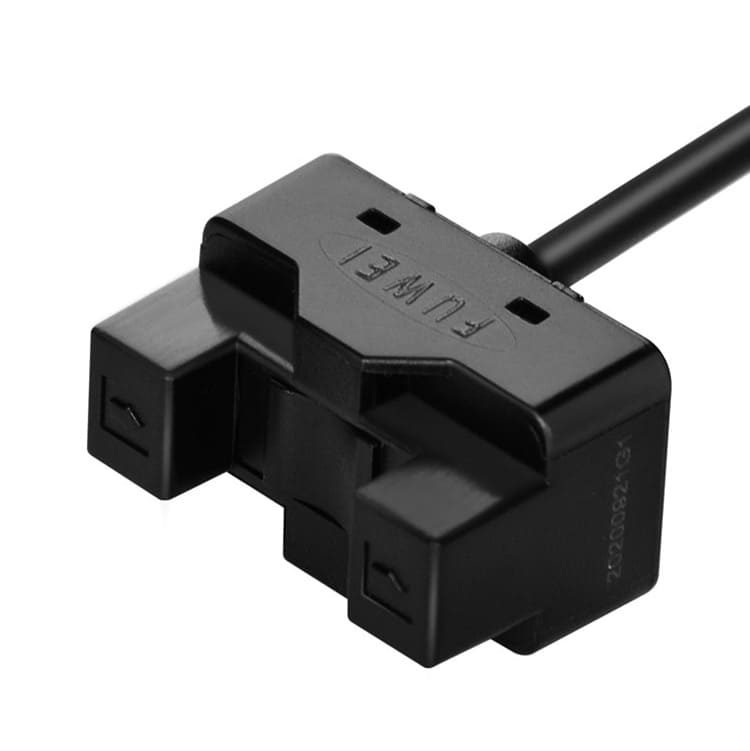
Modern digital displacement sensors incorporate cutting-edge technologies that push the boundaries of what’s measurable. Laser triangulation sensors use precisely focused laser beams to measure distance without physical contact, ideal for delicate materials or high-speed applications. Confocal chromatic sensors utilize multi-wavelength light to achieve sub-micron accuracy, while inductive and capacitive sensors provide robust solutions for harsh industrial environments. Each technology offers distinct advantages, allowing engineers to select the perfect sensor for their specific measurement challenges.
The integration of digital displacement sensors with Industry 4.0 and IoT systems represents the next frontier in measurement technology. Smart sensors equipped with embedded processors can perform real-time data analysis, trend monitoring, and predictive maintenance alerts. When connected to cloud platforms, these sensors become part of a comprehensive digital ecosystem, enabling remote monitoring, centralized data management, and AI-driven optimization of manufacturing processes. This connectivity transforms raw measurement data into actionable intelligence, driving efficiency and quality to new heights.
Selecting the right digital displacement sensor requires careful consideration of multiple factors. Measurement range, resolution, accuracy, sampling rate, and environmental conditions all play crucial roles in determining the optimal solution. Understanding the material properties of the target object, the required measurement speed, and the installation constraints ensures that the chosen sensor will deliver reliable performance throughout its operational lifetime. Fortunately, most manufacturers offer comprehensive technical support to help navigate these complex decisions.
As technology continues to advance, digital displacement sensors are becoming smaller, faster, and more intelligent. Emerging trends include the development of multi-axis sensors capable of measuring complex geometries in a single operation, wireless sensors that eliminate cable management challenges, and ultra-compact designs that integrate directly into manufacturing equipment. The future promises even greater integration with artificial intelligence, enabling sensors to not only measure displacement but also interpret the significance of those measurements in real-time.
The impact of digital displacement sensors extends far beyond simple measurement tasks. They form the foundation of automated quality control systems, enable the development of safer medical devices, support the creation of more efficient energy systems, and contribute to the advancement of scientific research. As manufacturing tolerances continue to tighten and quality standards become more rigorous, the role of these precision instruments will only grow in importance. For engineers and manufacturers worldwide, digital displacement sensors have become indispensable tools in the relentless pursuit of perfection.
Leave a Message