
In factories worldwide, a quiet revolution is unfolding—one that doesn’t involve massive machinery or robotic arms, but rather tiny, intelligent devices no larger than your palm. Industrial IoT sensors are becoming the nervous system of modern manufacturing, collecting data from every corner of production facilities and transforming how businesses operate, maintain equipment, and make decisions. These unassuming devices are proving to be the cornerstone of Industry 4.0, bridging the physical and digital worlds in ways previously unimaginable.
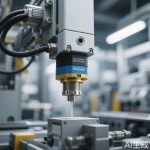
The true power of industrial IoT sensors lies in their ability to capture real-time data from equipment, environment, and processes. Temperature sensors monitor thermal conditions in critical machinery, vibration sensors detect abnormal patterns in rotating equipment, pressure sensors ensure optimal operating conditions, and proximity sensors track material movement throughout facilities. This continuous stream of data creates a digital twin of physical operations, allowing manufacturers to gain unprecedented visibility into their processes and equipment health.
Predictive maintenance represents one of the most significant applications of industrial IoT sensors. Traditional maintenance schedules often follow fixed timelines, resulting in either unnecessary maintenance or unexpected breakdowns. With IoT sensors continuously monitoring equipment conditions, manufacturers can shift from reactive or preventive maintenance to truly predictive approaches. Vibration analysis sensors can detect subtle changes in machine behavior weeks before actual failure, while thermal sensors identify overheating components long before they cause production stoppages. This proactive approach reduces downtime by up to 50% and cuts maintenance costs by 25-30%, according to industry studies.
Beyond maintenance, industrial IoT sensors are revolutionizing quality control processes. In pharmaceutical manufacturing, environmental sensors monitor temperature, humidity, and particulate levels in clean rooms, ensuring compliance with strict regulatory requirements. In food processing, sensors track temperature and humidity throughout the supply chain, guaranteeing product safety and freshness. Automotive manufacturers use precision measurement sensors to verify component dimensions with microscopic accuracy, significantly reducing defects and rework costs.
Energy management represents another frontier where industrial IoT sensors are making substantial impacts. Power consumption sensors monitor energy usage across facilities, identifying inefficiencies and opportunities for optimization. When combined with production data, these insights enable manufacturers to reduce energy consumption per unit produced, lowering both costs and environmental footprint. Smart lighting systems with occupancy sensors, HVAC monitoring with environmental sensors, and power quality monitoring with electrical sensors collectively contribute to sustainable manufacturing practices.
The implementation of industrial IoT sensors does face challenges, particularly regarding connectivity, security, and data management. Many industrial environments present harsh conditions—extreme temperatures, electromagnetic interference, vibration, and exposure to chemicals—that demand robust, industrial-grade sensors. Connectivity solutions must be reliable enough to handle critical data transmission, while security measures must protect against cyber threats that could compromise entire operations. Additionally, the massive volumes of data generated require sophisticated analytics platforms to extract meaningful insights.
Looking forward, the evolution of industrial IoT sensors continues at a rapid pace. Advancements in edge computing enable sensors to process data locally, reducing latency and bandwidth requirements. Artificial intelligence and machine learning algorithms are being integrated directly into sensor systems, allowing for more sophisticated analysis and autonomous decision-making. Meanwhile, developments in power harvesting technologies promise sensors that can operate for years without battery replacement, further expanding their application possibilities.
The convergence of 5G connectivity, advanced analytics, and increasingly sophisticated sensors is creating opportunities that extend beyond individual factories. Supply chain visibility, remote operations, and even entirely new business models are emerging as manufacturers leverage the comprehensive data provided by industrial IoT ecosystems. Companies that successfully harness this technology are not only optimizing their current operations but positioning themselves for future innovation and competitive advantage in an increasingly connected industrial landscape.
As we stand at the threshold of this industrial transformation, it’s clear that IoT sensors are no longer optional accessories but essential components of modern manufacturing. They represent the eyes, ears, and nervous system of smart factories, enabling levels of efficiency, quality, and reliability that were once the stuff of science fiction. The factories of the future won’t be defined by their size or output alone, but by their intelligence—and that intelligence begins with the humble industrial IoT sensor.

Leave a Message