
In the vast landscape of modern manufacturing and industrial operations, there exists a silent workforce that never sleeps, never complains, and operates with precision that would make even the most skilled human worker envious. These are Industrial sensors – the invisible guardians of quality, efficiency, and safety in today’s smart factories and industrial facilities. While they may not capture headlines like artificial intelligence or robotics, these sophisticated devices form the fundamental nervous system that enables the technological marvels of Industry 4.0.
The evolution of Industrial sensors represents one of the most significant technological transformations in modern manufacturing. From simple mechanical switches and basic photoelectric sensors of the past, today’s sensors have evolved into highly sophisticated systems capable of measuring everything from microscopic vibrations to chemical compositions. Modern Industrial sensors incorporate advanced technologies including IoT connectivity, artificial intelligence, and machine learning algorithms, transforming them from mere data collectors into intelligent decision-making components that can predict maintenance needs, optimize processes, and prevent costly downtime.
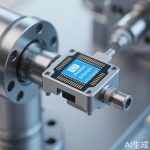
What makes contemporary industrial sensors truly remarkable is their incredible diversity and specialization. Proximity sensors detect the presence or absence of objects without physical contact, while vision sensors perform complex inspection tasks that once required human oversight. Temperature sensors maintain precise thermal conditions in critical processes, and pressure sensors ensure systems operate within safe parameters. Vibration sensors can detect equipment abnormalities long before human operators would notice any issues, while environmental sensors monitor air quality and detect hazardous conditions, protecting both workers and equipment.
The integration of industrial sensors with Internet of Things technology has created unprecedented opportunities for data-driven decision making. Smart sensors continuously collect and transmit data to centralized systems, where it’s analyzed in real-time to optimize production processes, reduce energy consumption, and improve product quality. This connectivity enables predictive maintenance strategies that can identify potential equipment failures weeks or even months before they occur, saving companies millions in unplanned downtime and repair costs. The data collected by these sensor networks also provides invaluable insights for continuous improvement initiatives and strategic planning.
Quality control represents one of the most critical applications where industrial sensors have made an extraordinary impact. Advanced sensor systems can detect defects invisible to the human eye, measure dimensions with micron-level precision, and verify assembly completeness with relentless accuracy. In pharmaceutical manufacturing, sensors ensure precise ingredient measurements and sterile conditions. In automotive production, they verify torque specifications and component alignment. In food processing, they monitor temperature and detect contaminants. The result is consistently higher quality products and significantly reduced waste.
Safety represents another domain where industrial sensors have revolutionized operations. Modern facilities employ sophisticated sensor networks to monitor for hazardous conditions, detect gas leaks, identify equipment malfunctions, and ensure proper machine guarding. These systems can automatically shut down equipment when unsafe conditions are detected, preventing accidents and protecting both personnel and assets. The implementation of advanced safety sensors has dramatically reduced workplace injuries in high-risk industries while simultaneously improving operational efficiency.
Looking toward the future, the role of industrial sensors is poised to become even more critical as manufacturers embrace increasingly automated and interconnected systems. The emergence of 5G technology promises to enhance sensor connectivity with lower latency and higher bandwidth, while edge computing enables sensors to process data locally for faster response times. Artificial intelligence integration will make sensors smarter and more autonomous, capable of adapting to changing conditions and making complex decisions without human intervention. These advancements will further blur the lines between physical operations and digital control systems.
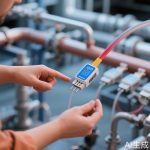
Despite their technological sophistication, the successful implementation of industrial sensors requires careful consideration of several factors. Selection must account for environmental conditions, measurement requirements, connectivity needs, and compatibility with existing systems. Proper installation, calibration, and maintenance are essential for optimal performance. Additionally, companies must develop robust data management strategies to handle the enormous volumes of information generated by sensor networks and extract meaningful insights from this data deluge.
As we stand at the threshold of the Fourth Industrial Revolution, industrial sensors continue to be the foundational technology that makes advanced manufacturing possible. They are the silent partners in innovation, the watchful guardians of quality, and the intelligent coordinators of complex industrial ecosystems. While they may operate in the background, their impact resonates through every aspect of modern manufacturing, driving efficiency, enabling innovation, and shaping the factories of the future. In the grand symphony of industrial progress, sensors provide the precise rhythm that keeps everything in perfect harmony.

Leave a Message